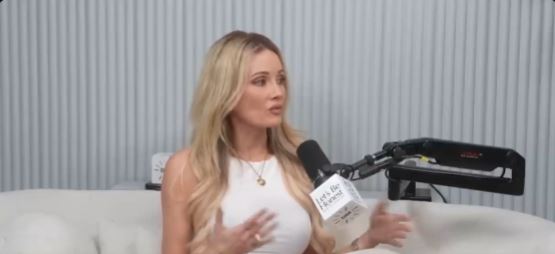
A widely shared video circulating on X shows Holly Madison recounting life inside the Playboy Mansion under Hugh Hefner. In the clip she describes Wednesday and Friday nights when the girlfriends took turns in his bed, each lasting about two minutes while porn played on large screens and the others waited. She says no one wanted to be there and everyone simply tried to finish. She also mentions Hefner handing out Quaaludes at clubs and telling her he had a team ready if someone overdosed. Madison portrays the house as cult-like, with a 9 p.m. curfew, girls played against one another, and belongings of those who left briefly packed outside the gate.
These details form the core of the video. Yet the same account reveals that Madison chose to enter and remain. Born Holly Sue Cullen in 1979, she studied theater and psychology, worked as a Hawaiian Tropic swimsuit model and Hooters waitress, and moved to Los Angeles. A customer invited her to mansion parties. After roughly a year of regular visits she asked Hefner if she could move in. In August 2001, at age 21 or 22, she became one of his girlfriends. She stayed seven years, attempted IVF with him, and only began planning her exit after that effort failed. She left in 2008 and later published a bestselling memoir.
The video and her later writings frame the experience as exploitation she could not escape. She emphasizes Hefner’s rules, the group nights, and the lack of outside limits. She does not dwell on the fact that she requested residency, continued participating for years, and returned after seeing others’ belongings discarded. This pattern matches cognitive dissonance: early pursuit of status and opportunity leads people to minimize drawbacks, after which regret is reduced by shifting blame outward. An external locus of control appears when repeated personal decisions—the initial request to live there, the multi-year stay, the IVF attempt—are treated as forced rather than chosen.
Madison has said Playboy culture attracted her because it seemed to offer visibility to models and actresses she admired. Before meeting Hefner her public work involved only swimsuit photography and waitressing. National recognition arrived years later through the 2005 E! series The Girls Next Door, with nude Playboy pictorials appearing only after the show raised her profile. She was never a Playmate. The video therefore documents both the mansion’s structured environment and her choice to remain inside it long enough to become famous from it. Her public narrative minimizes that sequence of decisions and instead stresses the absence of limits others failed to impose. The clip and surrounding accounts illustrate how voluntary participation in a high-visibility, high-constraint setting can later be recast as something done to her rather than by her.


Leave a Reply